
Blog
Why Menopause Symptoms Are Worse at Night

Introduction
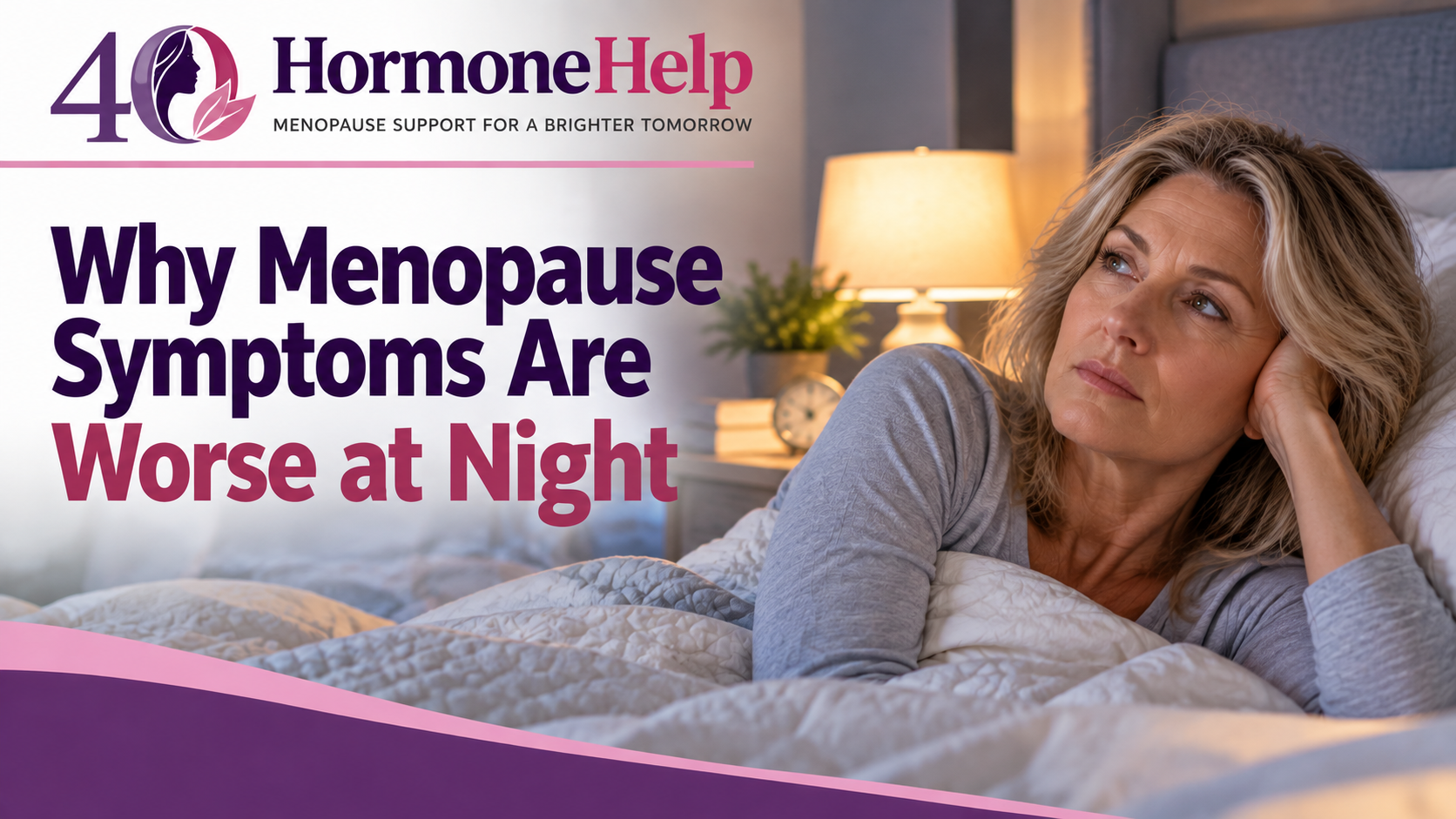
Menopause symptoms worse at night can make it difficult to fall asleep, stay asleep, and feel rested the next morning.
If your menopause symptoms seem manageable during the day but suddenly become worse when you’re trying to sleep, you’re not imagining it.
Many women notice that hot flashes, night sweats, anxiety, sleep problems, bladder issues, and even digestive discomfort can become more noticeable at night.
There isn’t one single reason this happens. Hormonal changes can affect your body’s temperature regulation and sleep patterns, while stress, bedroom temperature, eating habits, alcohol, caffeine, and other factors may make nighttime symptoms more noticeable.
And once menopause starts interfering with sleep, another problem develops: poor sleep can make you feel worse the following day, contributing to fatigue, irritability, brain fog, cravings, and difficulty managing stress.
Understanding why symptoms become worse at night can help you make practical changes that may make your evenings—and your mornings—more comfortable.
Why Can Menopause Symptoms Feel Worse at Night?
Menopause affects much more than your menstrual cycle.
As estrogen and progesterone levels fluctuate during perimenopause and eventually remain lower after menopause, those hormonal changes can influence several systems involved in sleep, mood, body temperature, and urinary and vaginal health.
At night, there are also fewer distractions.
During a busy day, you may not notice every small change in your body. Once you’re lying quietly in bed, symptoms such as warmth, anxiety, a racing heartbeat, bloating, or the urge to use the bathroom can become much harder to ignore.
Let’s look at some of the biggest reasons menopause nights can be difficult.
1. Hot Flashes Can Turn Into Night Sweats
Hot flashes are among the most common symptoms associated with menopause.
When they happen while you’re sleeping, they’re usually called night sweats.
You might suddenly wake feeling intensely warm, followed by sweating and sometimes chills as your body cools back down.
A severe episode may leave your pajamas or bedding damp enough that you need to change them.
This can interrupt your natural sleep cycle several times during the night.
Even relatively short awakenings can prevent you from getting the deep, restorative sleep your body needs.
Related Article: Hot Flashes During Menopause: Why They Happen and How to Find Relief
2. Your Body’s Temperature Regulation Is Changing
Your brain contains an area called the hypothalamus that helps regulate body temperature.
Hormonal changes during menopause can affect how your body’s temperature-control system responds to relatively small changes in temperature.
That can make you suddenly feel overheated even when the room doesn’t seem particularly warm.
At night, heavy blankets, warm pajamas, a warm bedroom, or sleeping next to another person can add even more heat.
Many women notice that menopause symptoms worse at night can make it harder to fall asleep and stay asleep.
Make Your Bed a Cooler Environment
A cooler sleeping environment may help make nighttime hot flashes and sweating more manageable.
Consider:
- Lightweight pajamas
- Breathable bedding
- A bedroom fan
- Layered blankets that are easy to remove
- Cooling pillows or pillowcases
- Moisture-wicking sheets
You don’t have to completely redesign your bedroom. Sometimes a few small changes can make nighttime temperature swings easier to manage.
3. Menopause Can Disrupt Your Natural Sleep Patterns
Night sweats aren’t the only reason women may struggle to sleep during menopause.
Hormonal changes, stress, mood changes, aging, medications, health conditions, and changes in sleep patterns can all contribute.
You may notice that you:
- Take longer to fall asleep
- Wake several times during the night
- Wake too early
- Have trouble falling back asleep
- Feel tired despite spending enough time in bed
The frustrating part is that sleep problems can then make other menopause symptoms harder to tolerate.
Related Article: Menopause Insomnia: Why You Can’t Sleep and What Helps
4. Anxiety Can Feel Stronger When Everything Gets Quiet
For some women, bedtime is when the mind suddenly becomes busy.
During the day, work, family, errands, conversations, and other activities provide distractions.
At night, those distractions disappear.
You may begin thinking about:
- Tomorrow’s responsibilities
- Family concerns
- Finances
- Health
- Work
- Relationships
- Menopause itself
Hormonal changes may also contribute to mood changes and anxiety during the menopausal transition.
The result can be a familiar cycle:
You worry because you can’t sleep.
Then worrying makes it even harder to sleep.
Related Article: Menopause Anxiety: Why It Happens and What Helps
5. Bladder Changes Can Wake You During the Night
Some women notice changes in bladder control or urinary habits around and after menopause.
Lower estrogen levels can affect tissues in the urinary and genital areas, while aging and pelvic-floor changes may also contribute.
You may find yourself waking during the night because you need to urinate.
Even if you fall asleep again quickly, repeated bathroom trips can fragment your sleep.
Try to stay properly hydrated during the day rather than avoiding fluids altogether. However, some women find it helpful to reduce large amounts of fluid immediately before bedtime.
Caffeine and alcohol may also increase nighttime bathroom trips for some people.
Related Article: Bladder Leakage During Menopause: Causes, Treatments, and Ways to Regain Your Confidence (2026 Guide)
6. Digestive Discomfort Can Be More Noticeable at Bedtime
Bloating, gas, heartburn, and other digestive discomfort can make it difficult to relax and fall asleep.
Large meals close to bedtime may be particularly uncomfortable for some women.
You may feel better by eating dinner earlier when possible and paying attention to foods that consistently cause nighttime discomfort.
Again, there isn’t one menopause diet that works for everyone.
Learning your personal triggers is more useful than unnecessarily eliminating large groups of foods.
Related Article: Menopause and Digestive Issues: Bloating, Gut Health, and Hormones (2026 Guide)
7. Alcohol Can Make Menopause Nights More Difficult
A glass of wine may initially make you feel sleepy, but alcohol can interfere with sleep quality later in the night.
For some women, alcohol may also trigger or worsen hot flashes.
If you’re struggling with nighttime menopause symptoms, consider paying attention to whether your symptoms are worse on evenings when you drink alcohol.
You don’t necessarily have to assume alcohol is the problem.
Simply look for a pattern.
8. Caffeine May Be Affecting You Longer Than You Realize
Coffee can be especially tempting after a poor night’s sleep.
But that can create another cycle.
You sleep poorly, drink more caffeine to stay awake, and then have trouble sleeping again the following night.
Caffeine affects people differently, and sensitivity can change with age.
If you’re having trouble sleeping, experiment with limiting caffeine later in the day and see whether your sleep improves.
The Menopause Sleep Cycle That Can Make Everything Feel Worse
Nighttime symptoms don’t always stay at night.
Imagine this pattern:
Hot flash → wake up → can’t fall asleep → exhausted the next morning → more caffeine → increased stress → another difficult night.
After several nights, fatigue can begin affecting almost everything.
Poor sleep may contribute to:
- Brain fog
- Irritability
- Low motivation
- Increased appetite
- Difficulty exercising
- Trouble concentrating
- Greater sensitivity to stress
This is one reason improving sleep can have benefits that extend well beyond bedtime.
Related Article: Menopause Brain Fog: Causes, Symptoms, and How to Think More Clearly Naturally (2026 Guide)
10 Ways to Make Menopause Nights More Comfortable
You can’t completely control hormonal changes, but you can create an environment that gives your body a better opportunity to sleep.
1. Keep Your Bedroom Cool
A slightly cooler bedroom may make nighttime temperature changes more comfortable.
A fan or air conditioner can help when needed.
Also consider whether heavy bedding is trapping unnecessary heat around your body.
2. Choose Breathable Bedding
Sheets and blankets that trap heat can make night sweats more uncomfortable.
Lightweight, breathable or moisture-wicking bedding may be worth considering if overheating is one of your biggest nighttime problems.
A cooling pillow or pillowcase may also help keep the area around your head and neck more comfortable.
You don’t necessarily need to replace everything at once.
Start with the part of your bedding that seems to trap the most heat.
3. Dress in Lightweight Layers
Heavy sleepwear can make a sudden hot flash feel even worse.
Lightweight pajamas can make it easier for body heat to escape.
Layers can also be useful because they’re easy to remove if you become hot and add back if you feel chilled afterward.
4. Create a Consistent Sleep Schedule
Try going to bed and waking at approximately the same time each day.
Consistency helps reinforce your body’s sleep-wake rhythm.
Sleeping very late after a difficult night may feel good temporarily, but dramatic changes in your schedule can sometimes make the next night’s sleep more difficult.
5. Develop a Wind-Down Routine
Give your brain a chance to transition from daytime activity to sleep.
Your routine might include:
- Reading
- Gentle stretching
- A warm shower
- Relaxing music
- Deep breathing
- Meditation
- Preparing your bedroom for sleep
The specific routine matters less than doing something consistently that tells your body the day is ending.
6. Reduce Screen Time Before Bed
Phones, tablets, televisions, and computers can keep your mind stimulated when you’re trying to relax.
If possible, create some screen-free time before going to sleep.
Even 30 minutes of quieter activity may help you transition toward bedtime.
7. Watch Evening Alcohol and Caffeine
If you’re having nighttime symptoms, experiment with reducing alcohol and avoiding caffeine later in the day.
Keep track of how you sleep.
You may discover that one affects you much more than the other.
8. Avoid Very Heavy Meals Right Before Bed
Going to bed immediately after a large meal can contribute to digestive discomfort or heartburn for some people.
When possible, allow your body some time to digest dinner before lying down.
If you’re hungry later, a small snack may be more comfortable than another large meal.
9. Stay Active During the Day
Regular physical activity supports overall health and may also help support better sleep.
Walking, resistance training, swimming, cycling, yoga, and other forms of movement can all count.
Try to find activities you actually enjoy enough to continue.
Consistency is more important than trying to follow a perfect exercise program.
Related Article: Natural Remedies for Menopause: 15 Ways to Feel Better Naturally (2026 Guide)
10. Keep Track of Your Nighttime Triggers
For a couple of weeks, consider keeping a simple record of:
- Bedtime
- Hot flashes
- Night sweats
- Alcohol
- Caffeine
- Evening meals
- Exercise
- Stress
- Bathroom trips
- How well you slept
You may begin seeing patterns that weren’t obvious before.
For example, you might discover that certain foods, alcohol, a warm bedroom, or stressful evenings consistently precede your worst nights.
That information can help you make targeted changes instead of changing everything at once.
Do You Need a Product to Sleep Better During Menopause?
Not necessarily.
Before buying anything, start with the basics: bedroom temperature, bedding, caffeine, alcohol, stress, exercise, and a consistent sleep routine.
However, if overheating is specifically what wakes you, cooling bedding or a cooling pillow can be a practical comfort option.
Likewise, if you’re considering a supplement or sleep product, remember that “natural” doesn’t automatically mean appropriate for everyone. Supplements can interact with medications or health conditions, so it’s a good idea to discuss them with your healthcare professional or pharmacist.
The goal isn’t to fill your bedroom with menopause products.
It’s to identify what is actually disrupting your sleep and address that problem.
When Should You Talk to Your Doctor?
Occasional poor sleep is common.
But persistent sleep problems shouldn’t automatically be dismissed as “just menopause.”
Talk with your healthcare professional if insomnia is frequent, symptoms are significantly affecting your daily life, or you’re concerned about what you’re experiencing.
It’s especially worth seeking medical advice if you have:
- Loud snoring or gasping during sleep
- Extreme daytime sleepiness
- Persistent insomnia
- Severe anxiety or depression
- Frequent nighttime urination
- Pain that regularly wakes you
- New or unusual symptoms
Sleep apnea, thyroid problems, urinary conditions, medications, mood disorders, and other health issues can sometimes produce symptoms that overlap with menopause.
There are also hormonal and nonhormonal treatments available for certain menopause symptoms. Your healthcare professional can help determine what options are appropriate for you.
Frequently Asked Questions
Why are my hot flashes worse when I go to bed?
Hormonal changes during menopause can affect your body’s temperature regulation.
Warm bedding, heavy pajamas, alcohol, stress, and bedroom temperature may also contribute.
Related Article: Hot Flashes During Menopause: Why They Happen and How to Find Relief
Why do I wake up around the same time every night during menopause?
There can be several reasons.
Hot flashes, changes in sleep patterns, stress, anxiety, bladder symptoms, alcohol, medications, and other health conditions can all contribute to nighttime awakenings.
If it happens frequently or significantly affects your life, discuss it with your healthcare professional.
Can menopause cause anxiety at night?
Some women experience increased anxiety during perimenopause and menopause.
At night, anxiety may also feel more noticeable because there are fewer distractions.
Relaxation techniques, regular exercise, a consistent sleep routine, and professional support when needed may help.
Why am I waking up drenched in sweat?
Night sweats are essentially hot flashes that happen during sleep.
However, not every episode of nighttime sweating is caused by menopause.
If sweating is new, severe, persistent, or accompanied by other unexplained symptoms, talk with your healthcare professional.
Will nighttime menopause symptoms eventually stop?
They may improve over time, but there isn’t one timeline that applies to everyone.
Some women experience symptoms for a relatively short period, while others have certain symptoms for years.
Related Article: Why Menopause Lasts Longer for Some Women
Final Thoughts
Menopause symptoms can feel worse at night because several factors can collide at once.
Hormonal changes may affect temperature regulation and sleep, hot flashes can become night sweats, bladder changes may wake you, and anxiety can become more noticeable once the day gets quiet.
Then poor sleep can make fatigue, brain fog, appetite, mood, and stress harder to manage the following day.
You don’t need to change everything at once.
Start by identifying what is actually waking you up.
If you’re overheating, work on temperature and bedding. If your mind won’t slow down, concentrate on your nighttime routine and stress management. If you’re repeatedly waking to use the bathroom or experiencing persistent insomnia, talk with your healthcare professional.
Small improvements that help you sleep more consistently can make the entire menopause experience feel more manageable.
Understanding why menopause symptoms worse at night can help you make small changes that may improve your comfort and sleep.
Related Articles
Hot Flashes During Menopause: Why They Happen and How to Find Relief
Menopause Insomnia: Why You Can’t Sleep and What Helps
Menopause Anxiety: Why It Happens and What Helps
Why Menopause Lasts Longer for Some Women
Natural Remedies for Menopause: 15 Ways to Feel Better Naturally (2026 Guide)
How Do You Know When Menopause Is Over? Signs You’ve Reached Postmenopause