
Blog
Hot Flashes During Menopause: Why They Happen and How to Find Relief

Introduction
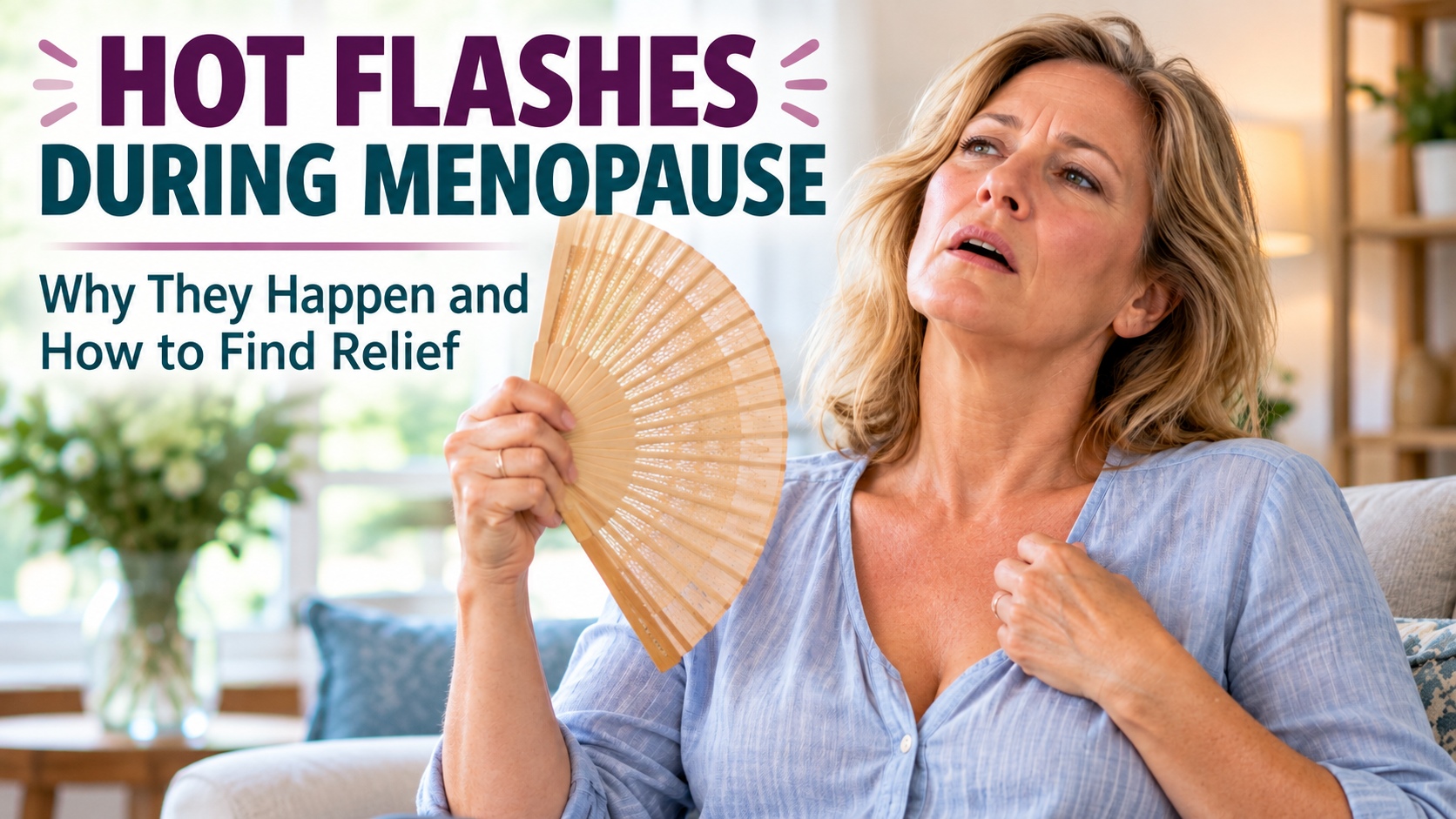
One minute you’re perfectly comfortable. The next, a sudden wave of heat spreads across your chest, neck, and face. You may start sweating, feel your heart beating faster, or find yourself reaching for a fan or pulling off another layer of clothing.
Hot flashes during menopause are among the most common and recognizable symptoms of the menopause transition. They can happen during the day, interrupt work or daily activities, and wake you repeatedly at night when they occur as night sweats.
Some women experience only occasional mild hot flashes, while others have them several times a day or continue experiencing them for years. Their frequency and intensity can also change over time.
Hot flashes are linked to hormonal changes that affect the body’s temperature-regulating system, but certain foods, drinks, stress, warm environments, and other triggers may make them more noticeable.
Fortunately, there are several ways to manage hot flashes, ranging from simple lifestyle changes and cooling strategies to nonhormonal medications and hormone therapy when appropriate.
In this guide, we’ll explain why hot flashes happen during menopause, common triggers to watch for, ways to find relief, and when persistent or severe symptoms are worth discussing with a healthcare professional.
Affiliate Disclosure: This article may contain affiliate links. If you make a purchase through one of these links, we may earn a commission at no additional cost to you. We only recommend products we believe may be useful to our readers.
Medical Disclaimer: This article is for educational purposes only and is not intended as medical advice. Always consult with a qualified healthcare professional before starting supplements, medications, or making significant changes to your health routine.
QUICK GUIDE: MANAGING HOT FLASHES DURING MENOPAUSE
Hot flashes can be frustrating, but a few practical changes may help make them easier to manage. Here’s a quick look at the strategies covered in this guide.
👚 Dress in Lightweight Layers
Choose breathable fabrics and layers you can quickly remove when a hot flash begins.
❄️ Keep Your Bedroom Cool
Use a fan or air conditioning, lightweight bedding, and breathable sleepwear to help manage nighttime overheating.
🛏️ Consider Cooling Bedding
Cooling pillows, breathable sheets, and moisture-wicking bedding may make night sweats more comfortable.
☕ Watch Caffeine and Alcohol
If either seems to trigger your hot flashes, try reducing the amount you consume and watch for changes.
🌶️ Be Careful With Spicy Foods
Spicy foods can temporarily increase warmth and sweating for some women.
🚶 Stay Physically Active
Regular exercise supports overall health, sleep, mood, cardiovascular health, and healthy weight during menopause.
🧘 Manage Stress
Walking, slow breathing, meditation, yoga, reading, gardening, or other relaxing activities may help when stress is a trigger.
🥗 Focus on Sustainable Healthy Habits
Adequate protein, vegetables and fruit, high-fiber foods, regular activity, resistance training, and adequate sleep can support overall health and weight management.
Keep reading below for all of our hot-flash strategies, cooling options, supplement information, and treatment choices in detail.
What Is a Hot Flash?
A hot flash is a sudden sensation of warmth or intense heat that isn’t caused by the temperature around you. It often begins in the upper body and spreads across the chest, neck, face, and sometimes the arms.
During a hot flash, you may experience:
• Sudden warmth or intense heat
• Flushed or reddened skin
• Sweating
• A faster or more noticeable heartbeat
• Chills as the hot flash passes
• Feelings of anxiety or uneasiness
A hot flash may last only a short time or continue for several minutes. Some women experience them occasionally, while others have multiple episodes throughout the day.
When hot flashes occur during sleep, they’re commonly referred to as night sweats.
What Are Night Sweats?
When hot flashes happen while you’re sleeping, they’re commonly called night sweats. For some women they’re mild, while for others they can be intense enough to soak pajamas or bedding and repeatedly interrupt sleep.
The hot flash itself may last only a few minutes, but waking up overheated and sweaty can make it difficult to fall back asleep. Repeated sleep disruption can contribute to daytime fatigue, difficulty concentrating, irritability, mood changes, and reduced energy.
That’s why managing nighttime hot flashes isn’t only about staying cool—it’s also about protecting the quality of your sleep.
Why Does Menopause Cause Hot Flashes?
Hot flashes are closely linked to the hormonal changes that occur during the menopause transition. As estrogen levels fluctuate and eventually decline, they can affect the way the brain regulates body temperature.
An area of the brain called the hypothalamus acts somewhat like the body’s thermostat. During menopause, the temperature range the body considers comfortable may become narrower.
That means even a relatively small change in body temperature can trigger a cooling response. Blood vessels near the skin widen, sweating increases, and you may suddenly feel intensely hot even though the temperature around you hasn’t changed.
This helps explain why a hot flash can seem to appear out of nowhere—and why the experience can be so different from simply feeling warm on a hot day.
When Do Hot Flashes Usually Start?
Hot flashes often begin during perimenopause, the years leading up to menopause when hormone levels and menstrual cycles begin to change.
Some women notice hot flashes while their periods are still fairly regular. For others, they become more noticeable as periods grow increasingly irregular.
Hot flashes also don’t necessarily stop once you’ve reached menopause. Some women continue experiencing them during postmenopause, although their frequency and intensity may change over time.
There is no single timeline that applies to every woman.
How Long Do Menopause Hot Flashes Last?
The duration of hot flashes varies considerably from one woman to another. While some women experience them for a relatively short period, others continue having hot flashes and night sweats for several years.
Symptoms may also change over time. Hot flashes can become less frequent or less intense, disappear for a while, and sometimes become noticeable again later.
There isn’t a specific point when hot flashes are guaranteed to stop, so your experience may be very different from someone else’s.
We cover this question in more detail in our article Why Menopause Lasts Longer for Some Women.
Related Article: Why Menopause Lasts Longer for Some Women?
What Can Trigger a Hot Flash?
Hormonal changes are the underlying reason many women experience hot flashes during menopause, but certain situations, foods, drinks, and lifestyle factors may trigger an episode or make one feel more intense.
Common triggers may include:
• Hot weather or warm rooms
• Heavy bedding
• Stress or anxiety
• Alcohol
• Caffeine
• Spicy foods
• Smoking
• Hot beverages
• Tight or heavy clothing
Triggers vary considerably from one woman to another. Something that consistently causes a hot flash for one person may have no noticeable effect on someone else.
That’s why identifying your own patterns can be more useful than trying to avoid every possible trigger.
Keep a Hot Flash Diary
Keeping a simple hot flash diary for a couple of weeks can help you identify patterns that might otherwise be easy to miss.
Each time you have a hot flash, consider noting:
• When it happened
• What you were doing
• What you recently ate or drank
• Whether you were feeling stressed or anxious
• How warm the room or environment was
• How intense the hot flash felt
After a week or two, look for patterns. You might notice that hot coffee, alcohol, spicy foods, stressful situations, or warm rooms tend to precede your symptoms.
You don’t need to eliminate everything you enjoy. The goal is simply to identify your personal triggers so you can decide which ones are worth adjusting.
HOW TO STOP HOT FLASHES NATURALLY
Lifestyle changes can’t guarantee that hot flashes will disappear, but they may help reduce how often they occur or make them easier to manage.
The most useful approach is usually a combination of staying cooler, identifying personal triggers, improving sleep habits, managing stress, and supporting overall health.
Here are several strategies worth trying:
1. Dress in Layers
Dressing in layers is one of the simplest ways to make a sudden hot flash easier to manage.
Instead of wearing one heavy layer, choose several lightweight layers that can be removed quickly as your body temperature changes.
Breathable fabrics such as cotton or moisture-wicking materials may also feel more comfortable when you’re sweating.
When the hot flash passes and you begin to cool down, you can simply add a layer back.
2. Keep Your Bedroom Cool
Night sweats can make it difficult to stay asleep, so keeping your bedroom comfortably cool may help reduce overheating during the night.
Consider using:
• A fan or air conditioning
• Lightweight, breathable bedding
• Moisture-wicking sleepwear
• Multiple thin blankets instead of one heavy comforter
• A glass or bottle of cool water near the bed
You don’t need to make the room uncomfortably cold. The goal is to create a sleeping environment that makes it easier to cool down quickly if a nighttime hot flash occurs.
🌟 Cooling Sleep Option
REST Evercool Cooling Pillow
Cooling pillows, breathable sheets, and moisture-wicking bedding may make nighttime hot flashes more comfortable by helping heat and moisture escape instead of trapping them against your body.
Look for lightweight, breathable materials and bedding designed to improve airflow or manage moisture.
These products won’t prevent the hormonal changes that cause hot flashes, but they may make it easier to cool down and return to sleep after a night sweat.
.
Best For
Women who experience nighttime overheating or night sweats and prefer a cooler-feeling pillow.
Why We Chose It
Hot flashes frequently involve intense warmth around the face and neck, making a cooling pillow a natural practical product for this article.
Pros
- Designed specifically for hot sleepers
- Provides a cooler sleep surface
- No supplements or medications involved
- Easy addition to an existing sleep routine
Cons
- Doesn’t prevent hot flashes
- Cooling sensation can vary between individuals
- More expensive than simply changing a pillowcase
👉 Check Today’s Price on Amazon
🌟 Another Night-Sweat Option
PeachSkinSheets
If night sweats are waking you up, the bedding underneath you matters too.
PeachSkinSheets are marketed toward hot sleepers and people dealing with night sweats, with an emphasis on moisture management and comfortable sleeping.
Again, sheets aren’t a medical treatment for menopause.
But if you’re frequently waking up hot and sweaty, choosing bedding designed with hot sleepers in mind may make your sleeping environment more comfortable.
Best For
Women whose hot flashes cause sweating and nighttime discomfort.
Why We Chose Them
Unlike another supplement, this gives women a practical way to address the comfort problem created by night sweats.
Pros
- Designed with hot sleepers in mind
- Focuses on moisture management
- Useful beyond menopause
- Doesn’t involve taking another supplement
Cons
- Doesn’t stop the underlying hot flash
- Individual comfort varies
- A complete sheet set can cost more than basic bedding
👉 Check Today’s Price on Amazon
3. Watch Your Caffeine and Alcohol
Caffeine and alcohol can trigger or worsen hot flashes for some women, although everyone’s response is different.
If you suspect either one affects you, try reducing the amount you consume or changing when you have it. For example, avoiding caffeine later in the day or alcohol close to bedtime may also help protect your sleep.
You don’t necessarily have to eliminate them completely. Your hot flash diary can help you determine whether either is a consistent trigger for you.
4. Be Careful With Spicy Foods
Spicy foods can temporarily increase feelings of warmth and cause sweating, which may make hot flashes more noticeable for some women.
If you think spicy foods are affecting you, try reducing the heat level or eating them less frequently for a couple of weeks and watch for changes in your symptoms.
You don’t need to eliminate foods you enjoy if they aren’t causing a problem. Hot flash triggers vary from person to person.
Use your hot flash diary to determine whether spicy foods are actually one of your personal triggers.
5. Exercise Regularly
Regular physical activity supports overall health during and after menopause.
Exercise can help support:
• Cardiovascular health
• Bone health
• Muscle strength
• Weight management
• Mood
• Sleep
Exercise isn’t guaranteed to stop hot flashes, but staying physically active can support many areas of health that become especially important during menopause.
6. Manage Stress
Have you ever noticed a hot flash appear when you’re anxious, upset, or under pressure?
Stress can be a trigger for some women.
Consider simple stress-management strategies such as:
- Slow breathing
- Walking
- Meditation
- Yoga
- Reading
- Gardening
- Spending time outdoors
- Listening to music
You don’t have to completely eliminate stress.
That’s impossible.
The goal is to develop healthier ways of responding to it.
7. Maintain a Healthy Weight
Body weight and hot flashes can sometimes be related, although the relationship isn’t exactly the same for every woman.
If weight management is one of your goals, avoid extreme diets promising rapid results.
Instead, concentrate on sustainable habits:
- Adequate protein
- Vegetables and fruit
- High-fiber foods
- Reasonable portions
- Regular walking
- Resistance training
- Adequate sleep
Related Article: Why Menopause Causes Belly Fat and What You Can Do About It
What About Menopause Supplements?
You’ll find hundreds of supplements marketed toward women experiencing menopause.
Some contain herbs, vitamins, minerals, plant compounds, or combinations of ingredients.
But supplements shouldn’t be treated as guaranteed solutions.
Different products contain different ingredients, and evidence varies considerably depending on the ingredient and symptom being studied.
If you’re considering a menopause supplement, check the ingredients carefully and discuss it with your healthcare provider if you take medications or have medical conditions.
If you’re considering supplements for hot flashes, our complete menopause supplement guide compares different options to help you make a more informed choice.
🌟 Featured Menopause Option
MenoRescue
MenoRescue is a menopause-focused supplement available through ClickBank.
We chose it for Article 21 because its positioning is specifically related to menopause rather than general weight loss, sleep, or another unrelated category.
The product is marketed toward women experiencing multiple menopause concerns, including temperature-related symptoms.
It’s important to keep expectations realistic.
A dietary supplement shouldn’t be viewed as a guaranteed cure for hot flashes, and individual experiences can vary considerably.
Best For
Women who want to investigate a menopause-specific dietary supplement as one part of their overall symptom-management strategy.
Why We Chose It
We wanted our ClickBank selection for this article to have a direct menopause connection rather than forcing one of our unrelated affiliate products into the article.
Pros
- Specifically positioned for women experiencing menopause
- Convenient supplement format
- Addresses multiple menopause concerns rather than one unrelated health issue
- Gives readers another option to research
Cons
- Results aren’t guaranteed
- Individual responses to supplements vary
- Supplements aren’t substitutes for medical treatment when symptoms are severe
- Ingredients should be reviewed for potential medication or health-condition interactions
👉 Learn More About MenoRescue
🌟 Amazon Menopause Option
Estroven Menopause Relief
Estroven Menopause Relief is another menopause-focused supplement option available through Amazon.
Estroven has several formulations, so readers should pay attention to the specific product they’re purchasing and review its ingredient label.
We chose an Estroven menopause product because it provides readers with another option to compare with MenoRescue rather than presenting one supplement as the answer for everyone.
Best For
Women interested in an over-the-counter menopause supplement from an established menopause-focused product line.
Why We Chose It
It gives readers a readily available Amazon alternative while remaining directly relevant to menopause symptoms.
Pros
- Specifically marketed for menopause
- Widely available
- Easy for readers to compare ingredients and formulations
- Convenient daily format
Cons
- Not every formulation contains the same ingredients
- Results vary
- Dietary supplements aren’t appropriate for everyone
- Doesn’t replace professional medical care for severe symptoms
👉 Check Today’s Price on Amazon
🌟 AWIN MENOPAUSE OPTION
APPROVED SCIENCE MENOPRIN
Approved Science Menoprin is a menopause-focused supplement formulated for women experiencing symptoms associated with the menopause transition. It provides another option for readers who want to compare menopause-specific formulas rather than relying on a single product recommendation.
Because supplement ingredients can affect people differently and may interact with medications or health conditions, review the ingredient label carefully and talk with a healthcare professional if you’re unsure whether it’s appropriate for you.
BEST FOR
Women looking for a menopause-specific supplement designed to provide broader support for common symptoms such as hot flashes, night sweats, sleep changes, and mood changes.
WHY WE CHOSE IT
Menoprin fits this article particularly well because it is formulated specifically for menopause rather than general women’s wellness. It also gives readers an AWIN option to compare with the existing ClickBank and Amazon products.
PROS
- Formulated specifically for women going through menopause
- Designed to address multiple common menopause concerns
- Provides another menopause-focused option beyond the existing products
- Available directly from Approved Science
- 60-day money-back guarantee
CONS
- Individual results can vary
- Contains multiple ingredients, so the label should be reviewed carefully
- May not be appropriate with certain medications or health conditions
- More expensive than some basic single-ingredient supplements
👉 LEARN MORE ABOUT MENOPRIN
Should You Take More Than One Menopause Supplement?
Generally, don’t assume that more supplements mean better results.
Combining several menopause products can mean unintentionally taking overlapping ingredients.
Menoprin, MenoRescue, and Estroven are presented as separate options to investigate—not products to take together.
Read the ingredient labels.
And if you’re taking medications or already using supplements, talk with your healthcare provider or pharmacist before adding another product.
What Medical Treatments Are Available for Hot Flashes?
Lifestyle changes and comfort products aren’t enough for every woman.
If hot flashes are interfering with your sleep, work, relationships, or quality of life, talk with your healthcare provider.
There are both hormonal and nonhormonal prescription treatment options for menopausal hot flashes.
For some women, menopausal hormone therapy can be an effective treatment for bothersome hot flashes and night sweats.
But hormone therapy isn’t appropriate for every woman.
Your age, health history, time since menopause, symptoms, medications, and individual risk factors all need to be considered.
There are also nonhormonal prescription options that may be appropriate for certain women.
This is an area where personalized medical advice really matters.
When Should You See a Doctor About Hot Flashes?
Hot flashes themselves are commonly associated with menopause.
But you should talk with a healthcare provider if symptoms are severe, unusual, suddenly begin without an obvious explanation, or significantly interfere with your everyday life.
It’s also important not to assume that every episode of sweating, flushing, or rapid heartbeat is automatically menopause.
Other health conditions and medications can sometimes cause similar symptoms.
A healthcare professional can help determine what’s going on.
Why Are Hot Flashes Worse at Night?
Many women swear their symptoms become worse as soon as they go to bed.
Several factors can contribute.
A warm bedroom, heavy blankets, sleepwear, alcohol before bed, stress, and normal changes in body temperature during sleep may all influence nighttime comfort.
Night sweats are important enough that we’re going to cover them separately.
Related Article: Why Menopause Symptoms Are Worse at Night
Can Hot Flashes Go Away and Come Back?
Yes, symptoms can fluctuate.
A woman may go through a period when hot flashes become less noticeable and then experience them again.
That doesn’t necessarily mean she’s somehow “starting menopause over.”
Hormonal changes, stress, health changes, medications, environmental temperature, and other factors can influence symptoms.
We’re also going to explore this question separately.
Frequently Asked Questions
What does a menopause hot flash feel like?
A hot flash usually feels like a sudden wave of warmth, often affecting the face, neck, and chest.
You may sweat, become flushed, feel your heart beating faster, and sometimes feel chilled afterward.
How long does a hot flash last?
Hot flashes vary from woman to woman.
Some are brief, while others last several minutes.
Frequency also varies considerably.
Why do I get hot flashes at night?
Hot flashes occurring during sleep are commonly called night sweats.
Hormonal changes affect temperature regulation, while warm bedrooms, bedding, sleepwear, alcohol, and other triggers may make nighttime symptoms more noticeable.
Can hot flashes continue after menopause?
Yes.
Some women continue experiencing hot flashes after they’ve reached menopause.
There isn’t a universal date when symptoms are supposed to stop.
What can I do immediately when a hot flash starts?
Try removing a layer of clothing, moving to a cooler environment, using a fan, drinking cool water, and slowing your breathing.
The goal is to make yourself comfortable while the episode passes.
Does a cooling pillow stop hot flashes?
No.
A cooling pillow doesn’t treat the hormonal changes responsible for hot flashes.
It may simply provide a cooler-feeling sleep surface, which some women find more comfortable when nighttime overheating occurs.
Are night sweats dangerous?
Night sweats associated with menopause aren’t necessarily dangerous, but repeated sleep disruption can affect quality of life.
Unexplained, severe, or persistent night sweats should be discussed with a healthcare provider because menopause isn’t the only possible cause.
Do hot flashes eventually stop?
For many women, hot flashes become less frequent and eventually stop.
But the timeline varies substantially.
Some women experience symptoms for a relatively short period, while others continue experiencing them for years.
Final Thoughts
Hot flashes may be one of the classic symptoms of menopause, but that doesn’t make them easy to live with.
A sudden wave of heat during the day can be uncomfortable and embarrassing.
Night after night of sweating and interrupted sleep can be exhausting.
And when symptoms continue for years, it’s understandable to wonder:
When is this finally going to end?
The answer is different for every woman.
Start by learning your triggers.
Keep your bedroom cool.
Dress in layers.
Pay attention to caffeine, alcohol, spicy foods, and stress.
Stay physically active.
And don’t underestimate the importance of making your sleeping environment more comfortable.
Products such as the REST Evercool Cooling Pillow and PeachSkinSheets won’t stop the hormonal process responsible for hot flashes, but they may help make nighttime symptoms easier to manage.
For women interested in menopause supplements, we’ve also included MenoRescue and Estroven Menopause Relief as two options to investigate—not products that need to be taken together and not guaranteed solutions.
Most importantly, don’t assume you simply have to suffer through severe hot flashes because you’re going through menopause.
If hot flashes or night sweats are disrupting your sleep or affecting your quality of life, talk with your healthcare provider.
There are treatment options.
And sometimes finding the right combination of medical care, lifestyle changes, trigger management, and simple comfort measures can make a very big difference.